
Fast, Reliable HVAC Cleaning Across Hell’s Kitchen
HVAC cleaning in Hell’s Kitchen typically runs $280–$650 for residential systems and is usually completed in a single visit. For the converted pre-war tenements and mixed-use buildings that dominate this neighborhood, we bring contractor-grade Rotobrush and Nikro equipment sized for narrow masonry chases and non-standard duct diameters that generalist crews struggle with.
We’re Richard Anderson and our HVAC Cleaning team — two decades of specialized duct and HVAC work, not generalist services tacked onto a broader menu. We know Hell’s Kitchen’s buildings because we’ve worked inside them: the steam-radiator tenements retrofitted with PTACs and fan-coil systems, the condo conversions with ductwork squeezed through 1890s brick, the ground-floor units on 9th Avenue pulling diesel soot from the Port Authority Bus Terminal three blocks east. When you call (833) 754-6107, Richard Anderson — owner and lead technician — handles your job personally. Same-day appointments are often available for 10019 and surrounding blocks.
Why Landmark Air Duct Cleaning Service New York Is Hell’s Kitchen’s Preferred HVAC Cleaning Company
Our reputation here is built on showing up and doing the work ourselves. Richard Anderson — owner and lead technician — handles your job personally, not a franchise rotating crew. That’s accountability no subcontractor model can match.
548 customers have left verified reviews averaging 4.9 stars. In Hell’s Kitchen specifically, we’ve cleaned HVAC systems in buildings from West 42nd to West 59th, from the Hudson River waterfront to the edge of the Theater District. Property managers on 9th and 10th Avenues call us back because we understand the two-layer contamination pattern — diesel soot overlaid with cooking grease — that defines this neighborhood’s air quality challenges.
We typically arrive within 90 minutes for Hell’s Kitchen calls. We carry Abatement Technologies and Rotobrush systems designed for the tight access points and non-standard ductwork common in pre-war conversions. Two decades of duct work, not generalist HVAC services.
Our HVAC Cleaning Services in Hell’s Kitchen
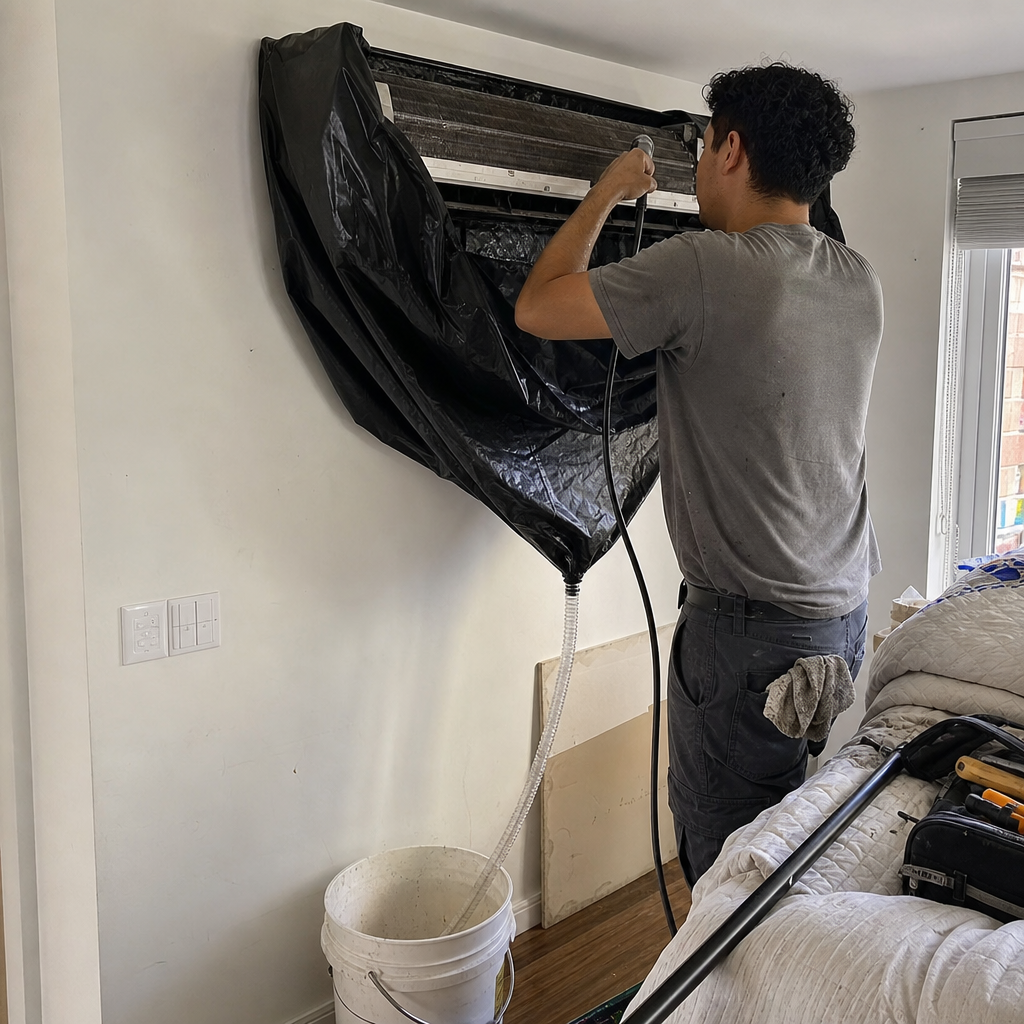
Evaporator Coil Cleaning
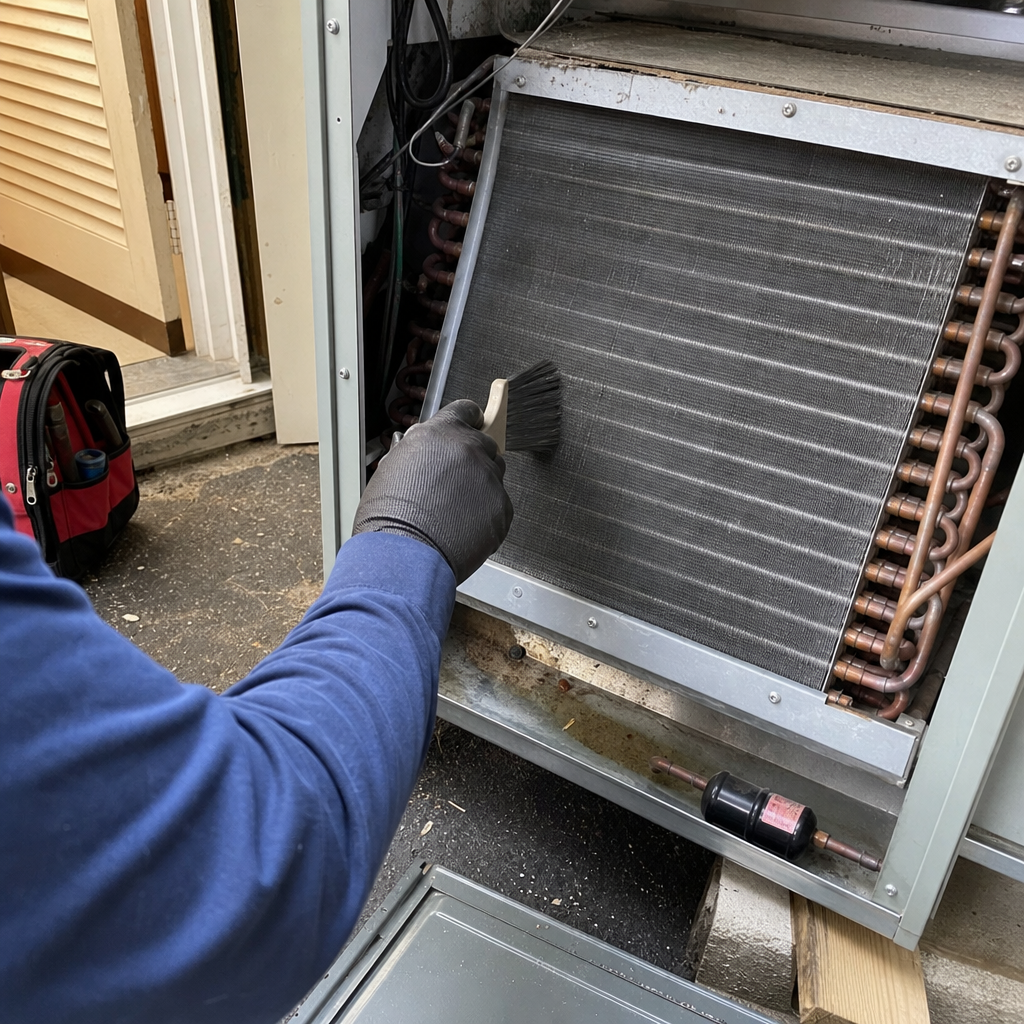
The evaporator coil is where moisture condenses and where grease-laden air first deposits its load. In Hell’s Kitchen, we’ve pulled coils from buildings near Restaurant Row on W. 46th Street that were caked with a gray-brown film — cooking grease hardened by the elevated humidity coming off the Hudson two blocks west. That grease traps diesel particulate, creating an insulating layer that drops efficiency by 30% or more and breeds microbial growth in the damp. Our coil treatment dissolves the grease base layer before mechanical cleaning, restoring heat transfer and cutting the musty odor that plagues lower-floor apartments on 9th Avenue.
Blower Cleaning
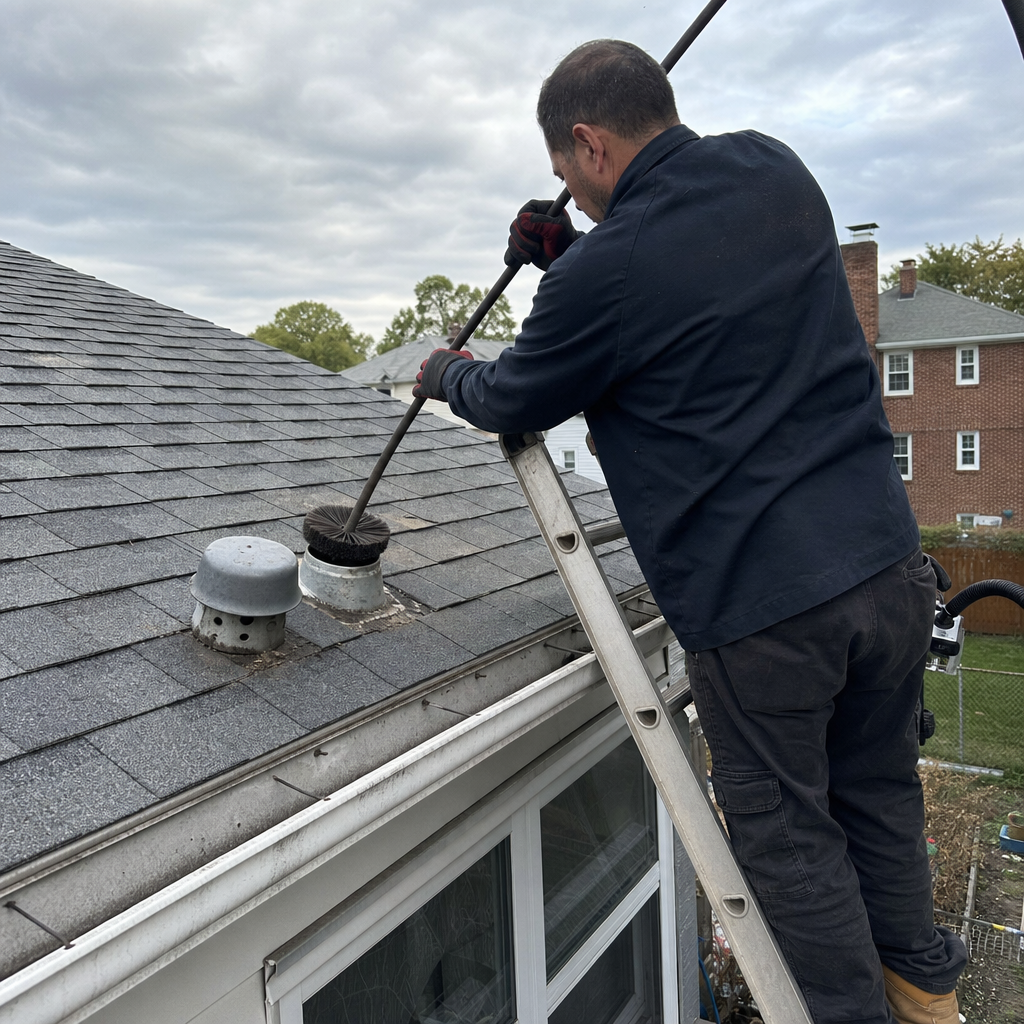
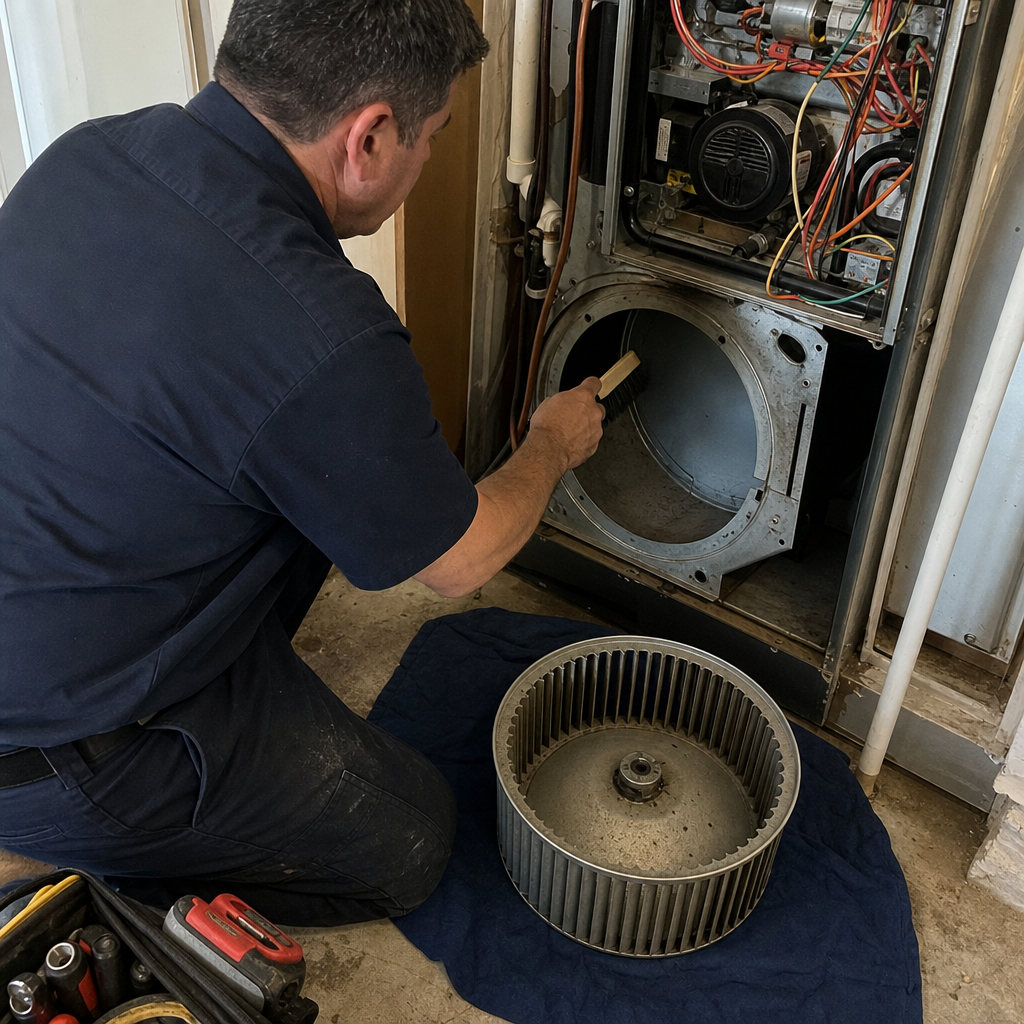
The blower wheel moves every cubic foot of air through your system. When it’s coated, airflow drops and the motor strains. In Hell’s Kitchen’s retrofitted tenements, blower wheels are often smaller than spec to fit modified air handlers, so even moderate contamination has outsized impact. On a recent job on 9th Avenue near W. 45th Street, our crew encountered a PTAC system in a converted pre-war tenement where the blower wheel and coil were caked with black-gray diesel soot from bus exhaust, overlaid with tacky grease from nearby restaurant vents. We had to apply a two-step degreasing pretreatment before our Rotobrush could effectively clean the ductwork, restoring airflow and reducing odors. That pretreatment step is standard for us on Hell’s Kitchen jobs — most suburban crews never encounter it.
Condenser Cleaning
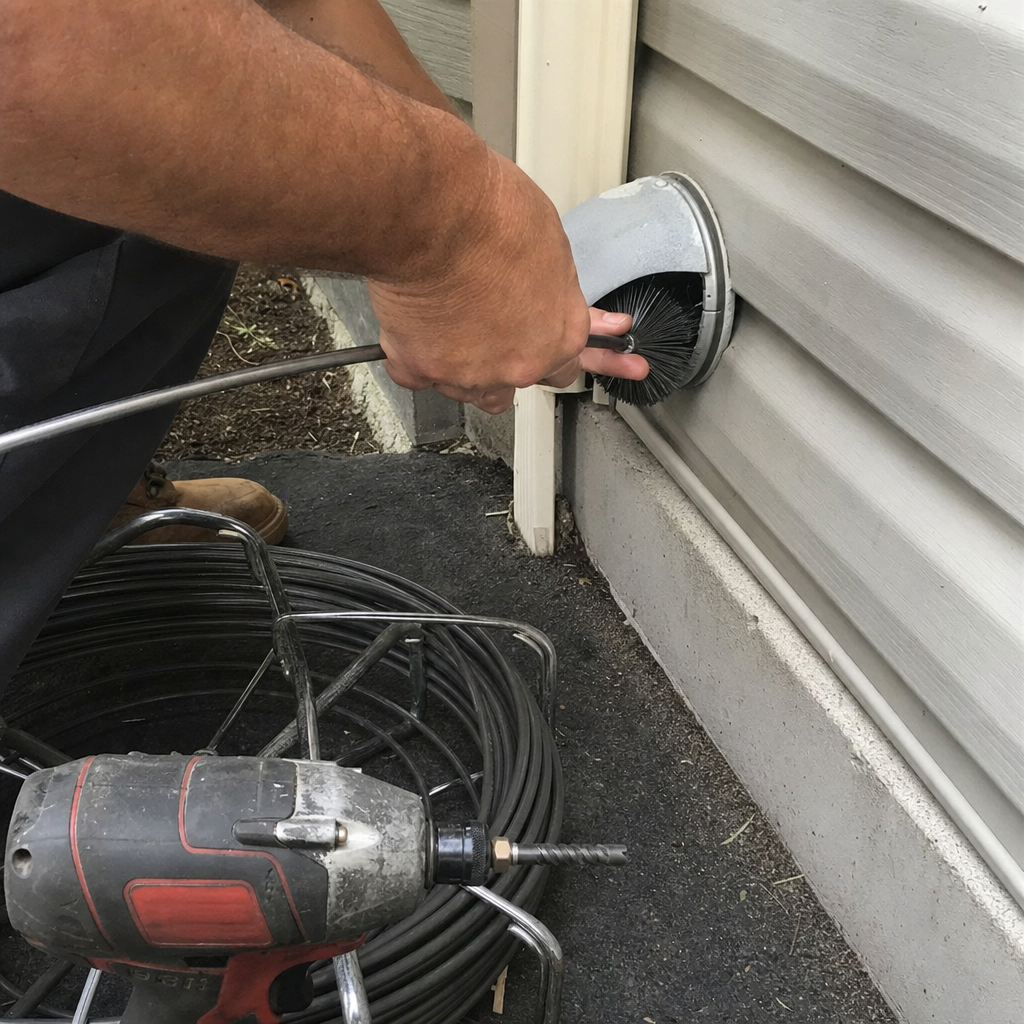
Outdoor condenser coils in Hell’s Kitchen face a unique assault: exhaust from the Lincoln Tunnel approach and Port Authority Bus Terminal deposits fine black particulate that clogs fin spacing, while grease aerosol from restaurant exhaust fans coats the aluminum and traps more debris. Rooftop units on 10th Avenue buildings are particularly vulnerable. We flush with foaming cleaner specific to grease-diesel combinations, then pressure-wash at angles that don’t bend fins. For ground-level PTAC condensers, we remove the sleeve entirely — the only way to clean the coil face properly without pushing debris deeper.
Air Handler Cleaning
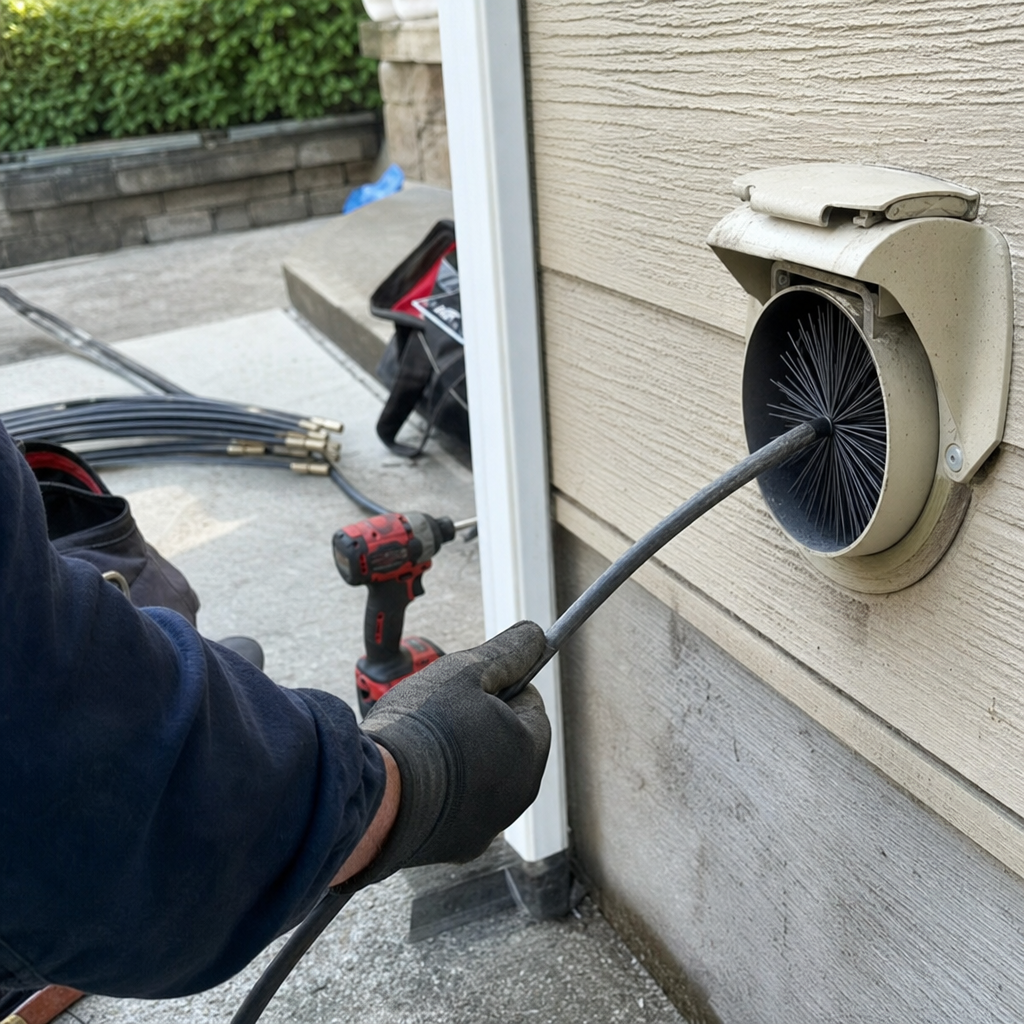
The air handler is the central station: filter rack, coils, blower, drain pan, and duct connections. In Hell’s Kitchen’s converted tenements, air handlers are often crammed into former closet spaces or ceiling cavities with 18-inch access hatches. We’ve developed techniques to clean these assemblies without dismantling surrounding structure — critical when you’re working in a 1920s masonry building where every penetration is a potential leak point. We inspect drain pans for grease-sludge accumulation that blocks condensate flow and causes overflow damage, a common call we get from buildings between 9th and 10th Avenues.
Heat Exchanger Cleaning
Gas-fired furnaces and packaged units in Hell’s Kitchen’s older conversions need heat exchanger inspection and cleaning to maintain safe, efficient combustion. Soot buildup from incomplete burning — exacerbated when grease-contaminated return air affects air-fuel mixture — can create dangerous conditions. We visually inspect and mechanically clean exchanger surfaces, checking for cracks or corrosion that would require repair or replacement. This is not a step we skip, and it’s not a step every cleaner performs.
Coil Treatment
After mechanical cleaning, we apply antimicrobial treatment to evaporator and condenser coils in Hell’s Kitchen jobs. The neighborhood’s combination of high humidity, grease nutrient loading, and restricted airflow in retrofitted systems creates conditions where mold and bacterial biofilms establish quickly. Our treatment — compatible with Honeywell and Aprilaire systems commonly found in these buildings — inhibits regrowth without leaving residues that affect air quality.
What happens when you call
- 1
A real person answersNo phone trees — you reach a local pro.
- 2
You get an upfront price rangeHonest numbers before anyone is dispatched.
- 3
A background-checked tech heads outLicensed & insured, dispatched right away.
- 4
You approve before work beginsNothing starts until you say go.
Trusted Brands We Service in Hell’s Kitchen
We work with the equipment already in your building. Honeywell electronic air cleaners and media filters, Aprilaire whole-house humidifiers and ventilation controls, Guardsman UV treatment systems — we’ve serviced and cleaned them all in Hell’s Kitchen properties. We stock common parts and replacement media for these brands, so when we find a clogged filter or failed UV lamp during HVAC cleaning, we can replace it same visit rather than ordering and rescheduling. For buildings with Rotobrush or Nikro cleaning systems already installed (some larger condo associations maintain their own), we can service those units as well. Fast turnaround matters in 10019, where a down system in July or January isn’t uncomfortable — it’s unlivable.
Common HVAC Cleaning Problems We See in Hell’s Kitchen Homes
- Diesel soot from bus traffic clogs filters and coils within weeks. The Port Authority Bus Terminal on 8th Avenue runs hundreds of diesel coaches daily, and the Lincoln Tunnel approach funnels commercial traffic through the neighborhood’s eastern edge. Ground-floor and lower-level units on 9th and 10th Avenues pull this exhaust directly into return air streams. We see filters blackened in 3–4 weeks versus the 2–3 month standard interval, and coils coated with fine particulate that standard cleaning won’t fully remove without pretreatment.
- Cooking grease from restaurants condenses in ducts, hardening into a tacky layer. Restaurant Row on W. 46th Street and the dense eatery corridors along 9th and 10th Avenues exhaust thousands of cubic feet of grease-laden air daily. When this infiltrates building intake points, it condenses on cool duct surfaces and coils, creating a sticky base that traps subsequent dust and soot. In humid conditions — common near the Hudson waterfront — this layer promotes mold growth and produces the musty, rancid odors Hell’s Kitchen residents frequently report.
- Non-standard duct diameters in retrofitted tenements hide missed sections. The 1890s-to-1920s brick walkups that dominate Hell’s Kitchen were never designed for forced-air systems. Ductwork added during conversion is often rectangular or oval, routed through original masonry chases with irregular dimensions. Technicians using standard round brushes miss corners and horizontal runs, leaving grease and soot accumulations that recirculate into apartments. We measure and select brushes specifically for each chase geometry — a step that adds time but delivers complete cleaning.
- Elevated humidity from the Hudson accelerates microbial growth. Two blocks from the waterfront, Hell’s Kitchen’s ambient moisture runs higher than inland Manhattan neighborhoods. Combined with grease nutrient loading and restricted airflow in compact systems, this creates ideal conditions for mold and bacterial colonies on coils and in drain pans. We address this with thorough drying and antimicrobial treatment, not just surface cleaning.
Pricing for HVAC Cleaning in Hell’s Kitchen, NY
Here’s what HVAC cleaning costs in Hell’s Kitchen’s market:
| Service | Typical Range |
|---|---|
| Evaporator Coil Cleaning | $180–$320 |
| Blower Cleaning | $150–$280 |
| Condenser Cleaning | $140–$260 |
| Air Handler Cleaning (full assembly) | $320–$550 |
| Heat Exchanger Cleaning | $200–$380 |
| Complete HVAC System Cleaning | $480–$850 |
Three factors push Hell’s Kitchen jobs toward the higher end: the two-layer contamination requiring degreasing pretreatment (adds 45–60 minutes), restricted access in converted tenements extending labor time, and non-standard ductwork needing specialized tooling. We quote upfront after inspection — no open-ended billing. Call (833) 754-6107 for a free estimate; Richard Anderson will assess your specific system and give you a firm number before any work begins.
We Also Serve Cities Near Hell’s Kitchen
Our service radius extends naturally from our Hell’s Kitchen base. We regularly work in Weehawken and West New York across the Hudson, where similar waterfront humidity patterns affect HVAC systems; Gramercy Park to the southeast, with its own pre-war housing stock; and Guttenberg to the north. Same owner-lead technician, same equipment, same direct accountability.
Serving Hell’s Kitchen, NY — Our Local Coverage Area
We’re based in the Hell’s Kitchen area and know this community well. Use the map below to see our service coverage — if you’re nearby, we can almost certainly help.
FAQs — HVAC Cleaning in Hell’s Kitchen
Diesel particulate from the Port Authority Bus Terminal and Lincoln Tunnel approach infiltrates return air and outdoor condenser intakes, coating filters, coils, and blower wheels with fine black soot that standard cleaning intervals won’t address. In Hell’s Kitchen, we typically recommend coil and filter service every 3–4 months for ground-floor and lower-level units on 9th and 10th Avenues, versus the standard 6-month cycle. Call (833) 754-6107 — we’ll inspect your system and recommend a schedule based on your floor level and proximity to traffic.
Yes — these buildings are our specialty. We’ve cleaned ductwork in dozens of converted tenements between 9th and 10th Avenues where original 1890s brick chases carry retrofitted rectangular or oval duct as small as 6×10 inches. We use compact Rotobrush heads and flexible Nikro whips sized for these dimensions, and we inspect with borescope cameras to verify complete coverage where visual access is impossible. Richard Anderson — owner and lead technician — has developed techniques specifically for these Hell’s Kitchen conversions over two decades of work in the neighborhood.
For buildings within two blocks of Restaurant Row on W. 46th Street or the dense eatery corridors on 9th and 10th Avenues, we recommend evaporator coil and blower cleaning every 4–6 months, with full duct inspection annually. The grease loading here is genuinely heavier than standard — not a sales pitch, a field observation from pulling equipment coated in tacky residue that standard intervals don’t prevent. Upper floors see reduced impact; ground-floor and second-floor units need the most frequent attention. Call (833) 754-6107 for a free assessment of your building’s specific exposure.
In most Hell’s Kitchen cases, yes — the musty odor in 9th Avenue apartments comes from microbial growth on grease-coated coils and in drain pans, fed by the neighborhood’s elevated humidity and cooking vapor infiltration. Cleaning the coil removes the organic base layer; our antimicrobial treatment inhibits regrowth. If odor persists after coil and blower cleaning, we inspect duct liners for grease saturation that may require replacement. We’ve resolved odor complaints in dozens of Hell’s Kitchen units this way. Call (833) 754-6107 to schedule — estimates are free.
It’s the distinctive pattern we find in this neighborhood: a base layer of tacky cooking grease from restaurant exhaust fans, overlaid with fine black diesel soot from Port Authority bus traffic and Lincoln Tunnel commercial vehicles. The grease provides a sticky surface that traps soot particles that would otherwise pass through; together they form a dense, insulating film that drops efficiency and breeds microbes. Standard dry-brush cleaning won’t remove it — we apply degreasing pretreatment first, then mechanical cleaning. This two-step process is standard on our Hell’s Kitchen jobs and rarely needed elsewhere. Call (833) 754-6107 if you suspect this pattern in your system.
Ready to get your Hell’s Kitchen HVAC system properly cleaned? Call (833) 754-6107 today for a free, no-obligation estimate. Richard Anderson — owner and lead technician — will assess your system personally, explain what we find, and give you upfront pricing before any work begins. Same-day appointments often available in 10019.
Written by Richard Anderson, Owner at Landmark Air Duct Cleaning Service New York, serving Hell’s Kitchen since 2004.