
What Duct Sealing Costs in New York, NY — and Why Most Estimates Miss the Real Problem
Duct sealing in New York typically runs $450 to $1,800 for residential systems, with most Brooklyn and Manhattan apartments falling in the $550–$950 range. Commercial buildings and pre-war structures with embedded duct chases can push toward the higher end. Call (833) 754-6107 for a free, exact estimate — Richard Anderson, our owner and lead technician, assesses every system personally before quoting.
I’ve pulled flex duct off connection collars in Brooklyn apartments where the joint was held together by a single wrap of deteriorated duct tape from 1994. No mastic. No drawband. Just tape that had been cooking against a hot air handler for 30 years. That’s not a comfort problem — that’s your utility bill disappearing into a wall cavity. In New York’s older housing stock, duct leakage isn’t a minor efficiency hit; it’s a structural design flaw. Many retrofitted duct systems in brownstones and converted apartments were never engineered to be airtight, which means 20–30% of your conditioned air routinely escapes before it ever reaches the room you’re trying to heat or cool.
How We Price Duct Sealing — and What Other Companies Leave Out of Their Quotes
Most cost guides online throw out a single national number. That doesn’t help you if you live in a 1920s co-op on the Upper West Side with ducts buried in plaster walls. At Landmark, we price by what we’re actually dealing with: access difficulty, linear footage of leaking runs, and whether we can reach the problem from an exposed basement or need to work around finished surfaces.
Here’s how the numbers break down for New York properties:
| Scope of Work | Typical Range |
|---|---|
| Small apartment system (exposed basement access, 1–2 leaking joints) | $450 – $650 |
| Mid-size residential (mixed access, 3–6 joints, flex + rigid repairs) | $650 – $950 |
| Large pre-war or brownstone (embedded runs, plaster chase work, full system) | $950 – $1,500 |
| Commercial or shared-duct co-op/condo buildings | $1,200 – $1,800+ |
| Add-on during scheduled cleaning (same visit, system already open) | 25–35% below standalone price |
The add-on pricing matters more than most homeowners realize. When Richard Anderson is already inside your system for a Duct Repair & Sealing or cleaning visit, the labor overhead drops significantly. We’re not making a second trip, setting up equipment twice, or running diagnostics from scratch. That’s why we’ll tell you upfront if we spot leakage during a cleaning — not to upsell you on a return visit, but to get it handled while we’re already there.
The Two Methods We Use — and Why the Wrong One Fails in New York’s Climate
Not all sealant is equal, and not every contractor specifies the right product for the joint type. We use two distinct methods, chosen by what we’re looking at:
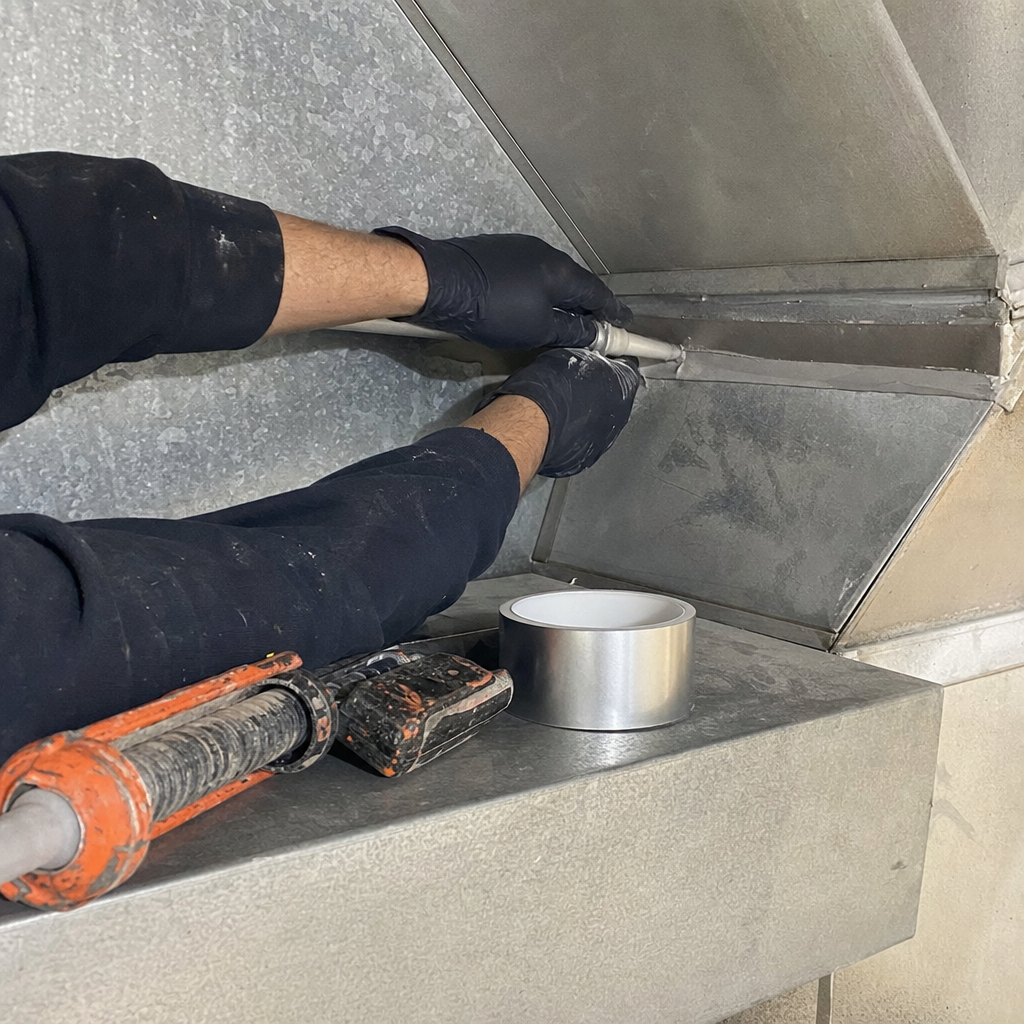
- Water-based duct mastic — applied with a brush or gloved hand to rigid metal joints, especially rectangular trunk lines and collar connections. Mastic remains flexible through decades of thermal cycling, which matters in New York where steam heat can push supply plenums past 180°F in January while the same ducts sit cold in shoulder seasons. We specify mastic anywhere two rigid surfaces meet and where vibration from rooftop equipment or building settlement could crack a tape seal.
- UL-181A-P listed foil tape — used for flex duct connections and temporary sealing during assessment. The key is the UL listing: standard hardware-store foil tape degrades in 3–5 years under HVAC thermal stress. The rated product we carry holds its adhesion through the temperature swings that kill off-brand tape. In Queens walk-ups and Brooklyn brownstones where flex duct was retrofitted into spaces never designed for it, proper tape at the flex-to-collar joint is often the difference between a sealed system and a slow leak that costs you $200+ annually in wasted energy.
Most cost articles skip this distinction entirely. They’ll say “we seal your ducts” without telling you whether they’re using mastic, tape, or an aerosol sealant system. Aerosol sealing — the blown-sealant method some companies promote — has its place in new construction with intact ductwork, but in New York’s older buildings with deteriorated flex, disconnected boots, and asbestos-wrapped mains, aerosol can’t fix a physical separation. It just seals around it. Richard Anderson won’t recommend a method that treats the symptom while the underlying joint falls apart.
Why New York’s Housing Stock Makes Duct Sealing a Different Calculation
Here’s what national cost guides don’t account for: New York City’s building fabric is unlike anywhere else in the country, and that changes both the problem and the fix.
Pre-war construction with embedded chases. In buildings from the 1920s through 1950s — common on the Upper West Side, Washington Heights, and much of Queens — ductwork was often run through plaster wall chases that weren’t designed as plenums. Over decades, building settlement cracks the plaster, and conditioned air pressurizes the wall cavity instead of the room. Sealing these requires accessing the chase, which sometimes means strategic opening of finished surfaces. We price that honestly; we don’t pretend we can magic-wand sealwork through a register.
Co-op and condo shared duct systems. Many mid-century and newer buildings, especially in Battery Park City and converted commercial structures in DUMBO, use through-wall HVAC units with shared vertical chases. When your duct leaks into that chase, you’re not just losing efficiency — you’re pressurizing your neighbor’s space and creating indoor air quality crossover. We’ve found buildings where one unit’s cooking odors and moisture were migrating through leaky chase walls into three other apartments. Sealing in these contexts isn’t just personal property maintenance; it’s a building-management issue that should be coordinated with your board.
Steam-to-forced-air conversions. In neighborhoods like Bed-Stuy and Crown Heights, former steam-radiator buildings were retrofitted with forced-air systems in the 1970s and 1980s. The ductwork was often sized for the available chase space, not for proper airflow, with undersized returns and supply runs that create static pressure problems. Sealing these systems without addressing the underlying pressure imbalance can actually make things worse — the fan works harder against the same restriction. Richard assesses static pressure and airflow before recommending sealwork; sometimes the right fix is a combination of sealing and minor duct modification.
Climate factor: humidity swings. New York’s summer humidity — 70% RH isn’t unusual in July and August — means duct leakage doesn’t just waste energy. It draws moist outside air into wall cavities during cooling season, creating condensation inside walls that you won’t see until there’s a mold problem. In winter, the reverse happens: warm, humid indoor air leaks into cold exterior wall cavities and condenses against sheathing. Proper sealing is moisture management, not just temperature control.
What You’re Actually Paying For — and How to Spot an Estimate That Hides Costs
When you compare duct sealing quotes in New York, look past the bottom line. Here’s what separates a legitimate scope from a lowball that’ll cost more later:
- Pre-seal leakage assessment. We measure airflow at registers and check temperature splits before touching anything. If a contractor gives you a number without putting a meter on the system, they’re guessing. Richard Anderson runs a Rotobrush inspection camera through accessible trunk lines on every evaluation — we show you what we’re seeing, not just tell you.
- Access work specified. “Seal all accessible ducts” is weasel language. Our quotes specify which runs are accessible, which require minor access (removing a ceiling tile, cutting a small drywall patch), and which are behind structural finishes that would require significant remediation. You know what you’re buying.
- Post-seal verification. We test after we seal. Temperature splits, register airflow, and visual inspection of our work. If the numbers don’t move, we keep working. This is standard for us; some competitors treat sealing as a “spray and pray” operation.
- Material specification. Our quotes name the product: mastic compound or UL-181A-P foil tape. Not “professional sealant,” not “industrial-grade adhesive.” Specifics matter when you’re trusting someone with the air you breathe.
I’ll tell you what you need. I won’t sell you what you don’t. That’s been Richard’s approach since he started Landmark on word-of-mouth referrals from his first jobs in Woodside, Queens, where he grew up a few blocks from the elevated 7 train. Two decades later, that same straight talk is why 548 customers have left verified reviews averaging 4.9 stars.
Why Combining Sealing with Cleaning Saves Money — and Gets Better Results
This is the practical point most homeowners miss. Duct sealing as a standalone service means:
- Separate trip charge and setup time
- Separate diagnostic work (accessing the system, running cameras, testing airflow)
- System downtime on two different days
When Richard Anderson arrives for a scheduled air duct cleaning — using our Nikro and Abatement Technologies HEPA-collection systems — the system is already open, the access panels are off, and the camera is running. He’s already seeing every joint, every connection, every spot where tape has failed or mastic has cracked. If leakage is present, we quote the sealwork on the spot and often complete it during the same visit.
The savings are real: 25–35% below a standalone sealing call, because we’re not charging twice for mobilization, setup, and system access. More importantly, the diagnostic quality is better. A cleaning visit gives us full visual access to the duct interior that a standard sealing estimate can’t match. We’ve found separated flex joints behind registers that no external inspection would have caught — because we were already inside with a Rotobrush camera for the cleaning.
Our full service scope — home page has the complete menu — covers cleaning, dryer vent service, HVAC cleaning, duct repair and sealing, and air quality sanitizing. One call, one technician, one accountability chain. Richard handles your job personally; there’s no franchise dispatcher sending whoever’s available that day.
When Duct Sealing Isn’t the Right Move — and What We Recommend Instead
Not every system benefits from sealing. Here are the situations where we’ll advise against it or suggest alternatives:
Ducts beyond repair. In some pre-war buildings, galvanized steel ductwork has rusted through from decades of condensation. Sealing rust holes is temporary at best; replacement sections are the honest recommendation. We’ll show you the camera footage and explain why.
Significantly undersized systems. If your ductwork was sized for a smaller unit or shorter runs, sealing can increase static pressure to the point of blower motor strain or reduced airflow. In these cases, we may recommend duct modification or resizing alongside selective sealing.
Asbestos-wrapped ducts. Some 1950s–1970s buildings have asbestos paper wrap on ductwork. We don’t disturb asbestos; if we encounter it during inspection, we’ll refer you to a licensed abatement contractor and resume work once clearance is issued. This is non-negotiable for safety and legal compliance.
FAQs
Most residential duct sealing in New York costs between $450 and $950, with pre-war apartments and brownstones trending higher due to access difficulty. Commercial buildings and co-op shared-duct systems typically range from $1,200 to $1,800+. Call (833) 754-6107 for a free, exact estimate based on your specific building and system layout.
Sealing is almost always cheaper than replacement for isolated leaks at joints and connections, typically saving 60–70% versus full duct replacement. However, if the duct material itself is rusted through, crushed, or asbestos-wrapped, replacement or abatement becomes necessary — and we’ll tell you straight when that’s the case rather than sell you a temporary seal.
Yes — and it’s usually 25–35% less expensive than scheduling separate visits. When Richard Anderson is already inside your system for a cleaning, the diagnostic work and access labor are already done; adding sealwork eliminates a second trip charge and setup fee. Most of our sealing jobs in Brooklyn and Queens happen as same-day add-ons to cleaning appointments.
Signs include rooms that never reach target temperature, unusually high utility bills, dust accumulation around register edges, or whistling sounds from duct joints. During every cleaning, Richard assesses leakage visually and by airflow feel — customers are told about sealing needs before we leave, not upsold on a return visit. If you’re unsure, a free estimate with airflow testing will give you concrete numbers.
Get Your Exact Duct Sealing Estimate in New York
Don’t guess at whether your ducts are leaking — and don’t trust a national average that doesn’t account for your pre-war plaster walls or co-op shared chases. Richard Anderson, Owner & Lead Technician at Landmark Air Duct Cleaning Service New York, will assess your system personally, show you what the camera sees, and quote exact sealwork with no hidden access fees. Two decades of duct specialization, contractor-grade Rotobrush and Nikro equipment, and 548 verified reviews at 4.9 stars — that’s the accountability you get when the owner does the work.
Call (833) 754-6107 today for a free estimate. We’ll schedule around your availability, and if you’re already due for cleaning, we’ll handle both in one efficient visit.
Written by Richard Anderson, Owner & Lead Technician at Landmark Air Duct Cleaning Service New York, serving New York, NY.