
Abatement Technologies Air Duct Cleaning in New York City: A Homeowner’s Guide
Abatement Technologies air duct cleaning in New York City refers to the use of professional-grade negative air machines, HEPA air scrubbers, and containment systems manufactured by Abatement Technologies — equipment designed for mold remediation, post-fire restoration, and hazardous material abatement that has been adapted for residential duct cleaning. When operated by a properly trained technician with correct negative pressure containment, this equipment can remove fine particulate, microbial contamination, and smoke residue that standard rotary brushes leave behind. If you’d rather not spend your weekend evaluating contractor equipment, Landmark Air Duct Cleaning Service New York brings 20 years of specialized experience and Abatement Technologies training to every job — call (833) 754-6107 for a free estimate.
A HEPA-500 negative air machine from Abatement Technologies is one of the most capable pieces of duct cleaning equipment available — and I’ve seen it used so improperly that it redistributed contamination rather than removing it, because the operator didn’t understand negative pressure containment. The machine itself costs roughly $3,500–$4,200 new, which tempts some contractors to buy it for credibility without investing in the training to run it correctly. Here’s what New York City homeowners actually need to know.
What Abatement Technologies Equipment Actually Does
Abatement Technologies manufactures three distinct product categories that get lumped together in marketing copy but serve very different purposes. Understanding the difference protects you from paying for gear you don’t need — or worse, getting inadequate cleaning because the wrong tool was deployed.
Negative air machines (NAMs) like the HEPA-500 create vacuum pressure inside your ductwork, pulling contaminants through a HEPA filter rather than letting them escape into living spaces. These are essential during mold remediation, asbestos abatement, or any job where disturbed material could become airborne. The machine doesn’t clean the duct — it contains what gets released during cleaning.
Portable air scrubbers such as the Predator series recirculate room air through HEPA and carbon filtration. They’re used to clean ambient air in the work zone, not the ducts themselves. Useful during and after a job, but they don’t substitute for source removal inside the system.
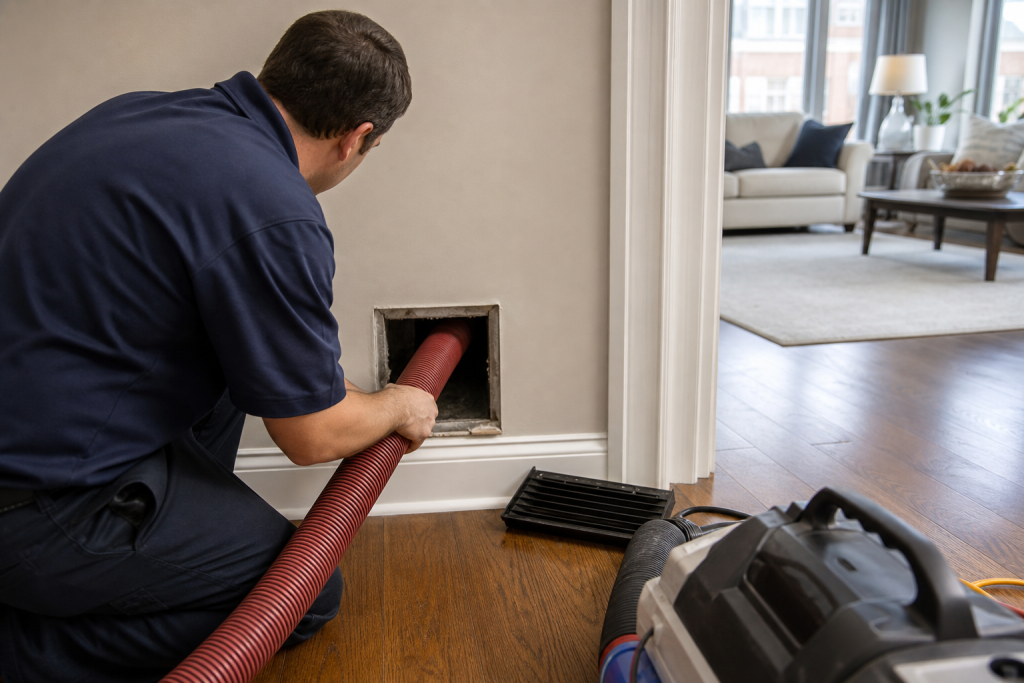
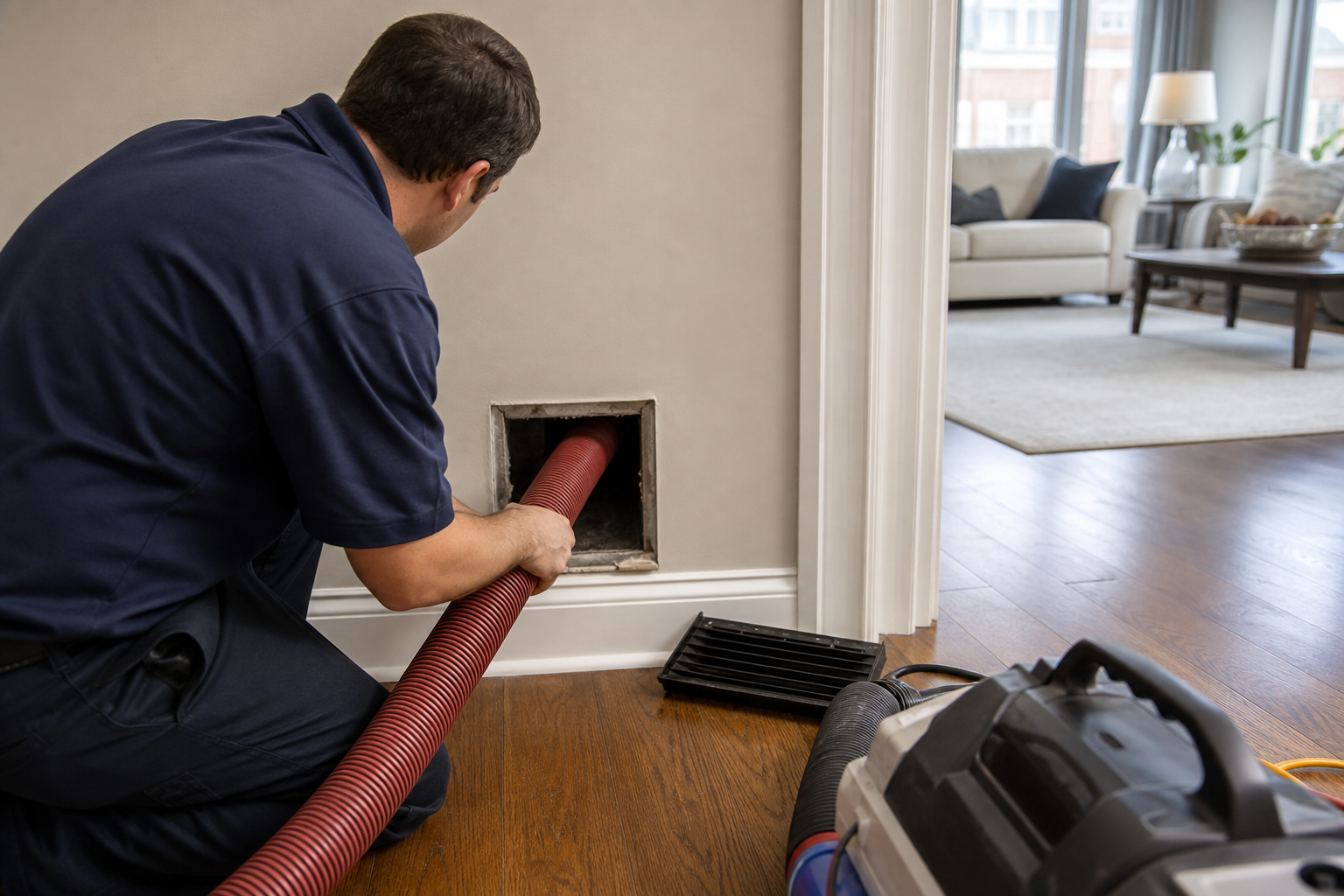
HEPA vacuums and extraction tools make direct contact with duct surfaces. When paired with a NAM, they allow mechanical agitation — brushing, compressed air whipping, or contact vacuuming — while the negative air machine captures what gets dislodged.
In our experience across Manhattan pre-war buildings and Queens row houses, most residential duct cleaning jobs need the vacuum-extraction combination, not full negative air containment. The exception: post-fire smoke damage in Brooklyn brownstones, where we’ve found Abatement Technologies NAMs essential for capturing odor-bearing particulate that standard equipment simply re-aerosolizes.
Why Containment Setup Matters More Than the Machine
The HEPA-500 is only as good as the containment around it. Negative pressure containment means creating a sealed work zone where air flows inward through controlled entry points, passes through the HEPA filter, and exhausts clean — preventing contaminated air from escaping into your home.
Proper containment in a New York City residential job looks specific:
- Polyethylene sheeting sealed with contractor tape around all vents, returns, and access points in the work zone
- A single controlled entry point with a zipper door or airlock flap
- The NAM positioned to pull air from the farthest point in the duct run, creating directional airflow toward the machine
- Continuous monitoring with a manometer or smoke pencil to verify negative pressure is maintained — not just “the machine is running”
- Filter change-out logs, since a loaded HEPA filter loses efficiency and can become a contamination source itself
We were called to a job in Astoria last year where a previous crew had run a HEPA-500 for three hours with a torn containment seal behind a radiator. The machine ran beautifully. The living room got coated in fine soot. The homeowner paid twice: once for the failed cleaning, once for us to redo it with proper containment. Equipment without protocol is just expensive noise.
How to Verify Your Contractor Is Using the Equipment Correctly
Any contractor in New York City can mention Abatement Technologies on their website. Fewer can show you their equipment is properly calibrated and maintaining negative pressure during your specific job. Here’s what to ask:
- “Can you show me the pre-job calibration on your HEPA-500?” The machine should be tested for airflow (typically 500 CFM on high) and filter integrity before each job. A trained technician has this documentation.
- “Where will you establish containment, and how will you monitor negative pressure?” Vague answers about “sealing the vents” suggest protocol gaps. Specific answers about polyethylene barriers, tape types, and real-time manometer readings suggest training.
- “What’s your filter change schedule, and can I see the last change date?” HEPA filters load progressively. A filter with 400 hours of use performs differently than one with 40. Abatement Technologies specifies pressure-drop monitoring; ask how they track it.
- “What training certifies you on this equipment specifically?” General IICRC certification is valuable but doesn’t cover Abatement Technologies operation. Look for manufacturer-specific training or advanced remediation certifications like ACAC or NORMI that include negative pressure protocols.
Richard Anderson — owner and lead technician — handles your job personally, and we maintain calibration logs for every piece of equipment we bring into your home. Two decades of duct work, not generalist HVAC services, means we’ve seen what happens when protocols get skipped.
When Abatement Technologies Equipment Is Actually Necessary
Not every duct cleaning job in New York City needs negative air containment. Using a HEPA-500 for routine maintenance is marketing overhang — impressive-sounding equipment that drives up your quote without improving results. These are the specific scenarios where we deploy Abatement Technologies systems:
Post-fire smoke damage: Fire residue contains acidic particulate and volatile organic compounds that standard brushes redistribute. We used a HEPA-500 with activated carbon filtration during a post-electrical-fire job in a Washington Heights co-op where conventional cleaning had failed to clear the acrid odor. The negative air containment prevented cross-contamination to adjacent units — critical in New York City’s dense housing stock.
Sewage backup or Category 3 water intrusion: Bacterial and viral contamination requires containment during disturbance. The NAM protects both occupants and adjacent properties.
Post-mold remediation clearance cleaning: After remediation, ducts need cleaning without reintroducing spores. Negative pressure containment with HEPA filtration provides documented air quality control that clearance testing can verify.
Lead or asbestos abatement adjacent to ductwork: Regulatory requirements mandate negative air containment. This isn’t optional equipment — it’s legal compliance.
For routine dust and allergen removal in typical New York City residential systems, contractor-grade equipment from Rotobrush or Nikro with proper source-removal technique delivers equivalent results at lower cost. We match the tool to the condition, not the marketing angle.
What Training Should Accompany the Equipment
Owning a HEPA-500 and knowing how to use it correctly are different competencies. The contractor who shows you a shiny machine but can’t explain static pressure, filter loading curves, or containment verification is demonstrating equipment, not expertise.
Relevant certifications that indicate genuine operational knowledge:
- IICRC WRT (Water Damage Restoration Technician) and AMRT (Applied Microbial Remediation Technician) — foundational for understanding contamination control
- ACAC CMR (Certified Mold Remediator) or CIEC (Certified Indoor Environmental Consultant) — indicates advanced understanding of airborne contaminant behavior
- Manufacturer-specific training from Abatement Technologies — less common but valuable; covers equipment-specific maintenance and troubleshooting
- NYC Department of Environmental Protection asbestos or lead abatement certifications — required for certain job types, and indicates familiarity with regulatory containment standards
Our 548 customers, 4.9 stars — results you can verify before you book — reflect consistent protocol execution, not just equipment ownership. From cleaning to repair to sanitizing — one call closes the loop on your air quality.
When to call a pro: If you’re dealing with post-fire odor, visible mold, or contamination from water damage, negative air containment isn’t optional — it’s protective. For routine maintenance, ask whether the contractor is specifying equipment your job actually needs.
Related services in New York City: We also provide Dryer Vent Cleaning in Buffalo and HVAC Cleaning in Buffalo using the same contractor-grade standards.
The Bottom Line
Abatement Technologies equipment represents genuine capability in specialized duct cleaning scenarios — post-fire, post-mold, and hazardous material situations where containment failure has real consequences. The brand name alone guarantees nothing. What matters is whether your contractor can explain their containment protocol, show calibration documentation, and match the equipment to your specific condition rather than deploying impressive machinery for routine dust removal.
In New York City’s aging housing stock, with its mix of pre-war plaster, post-war asbestos-containing materials, and modern high-efficiency systems, equipment knowledge separated from building knowledge still fails. We’ve spent 20 years learning both. If you’re in New York City and need help evaluating whether your job requires professional abatement-grade equipment, Landmark Air Duct Cleaning Service New York offers free estimates — call (833) 754-6107.
Frequently Asked Questions
Jobs requiring negative air containment with Abatement Technologies equipment typically run $800–$2,400 in New York City, compared to $400–$900 for standard residential cleaning, depending on system size, contamination type, and containment complexity. Post-fire and mold remediation scenarios fall at the higher end due to labor-intensive setup and disposable containment materials. Call (833) 754-6107 for an exact quote — estimates are free.
Ask to see the equipment serial number and maintenance logs, and request a demonstration of their manometer or smoke pencil for verifying negative pressure. A contractor with genuine training will welcome these questions; one who’s borrowing credibility will deflect. We bring our HEPA-500 and calibration documentation to every consultation where containment is indicated.
No — for routine dust and allergen removal, source-removal equipment from Rotobrush or Nikro with proper technique achieves equivalent results at lower cost. Negative air machines become necessary when disturbing contaminated material that could become airborne, such as mold, fire residue, or sewage-related bacteria. We specify equipment based on inspection findings, not marketing appeal.
Contamination indicators include persistent musty or smoky odors after standard cleaning, visible mold growth inside ducts, recent water damage with Category 2 or 3 intrusion, or post-remediation situations requiring clearance documentation. Pre-war buildings in neighborhoods like the Upper West Side or Park Slope often have compounded issues from aging materials and previous incomplete repairs. Call (833) 754-6107 for an inspection — we’ll tell you honestly whether your job needs abatement-grade equipment or standard cleaning.
Written by Richard Anderson, Owner & Lead Technician at Landmark Air Duct Cleaning Service New York, serving New York City since 2006.
Need Air Duct Cleaning Help?
Call Landmark Air Duct Cleaning Service New York — licensed & insured, here with fast after-hours help in New York.
(833) 754-6107