
Fast, Reliable Air Quality & Sanitizing Across Corona
Air quality sanitizing in Corona typically runs $280–$650 depending on contamination severity and system size, with most jobs completed in a single visit. If you’re noticing persistent musty odors, allergy flare-ups, or that dark, greasy film reappearing on your vents no matter how often you dust, your ductwork likely needs more than a surface wipe — it needs professional sanitizing built for Corona’s unique contamination profile. We’re Landmark Air Duct Cleaning Service New York, and our Air Quality & Sanitizing team knows the 11368 zip code well. Richard Anderson — owner and lead technician — handles your job personally, bringing two decades of duct work and contractor-grade equipment to row houses on 104th Street, apartment buildings off Junction Boulevard, and commercial spaces along Roosevelt Avenue. Call (833) 754-6107 for a free estimate, and we’ll usually be there same day or next.
Why Landmark Air Duct Cleaning Service New York Is Corona’s Preferred Air Quality & Sanitizing Company
We’ve built our reputation one job at a time across Queens, and Corona represents some of our most challenging — and most satisfying — work. 548 customers have left verified reviews averaging 4.9 stars, and many of our Corona calls come from referrals in the same 2-to-4-family buildings where neighbors compare notes on who actually solved their air quality problems.
Richard Anderson — owner and lead technician — handles your job personally. Not a franchise crew. Not a subcontractor you’ve never met. The person who built this business is the person who shows up with the Rotobrush and the Abatement Technologies HEPA unit. That accountability matters when you’re letting someone into your 1930s row house or your family’s apartment.
Our response time to Corona is typically same-day or next-day because we’re based in New York City, not dispatched from Long Island or New Jersey. We understand the local housing stock: the retrofitted forced-air systems crammed into former steam-radiator buildings, the tight crawlspaces beneath those brick row houses, the specific corrosion patterns that old metal ducts develop after decades of humid summers and aviation particulate exposure. Two decades of duct work, not generalist HVAC services.
Our Air Quality & Sanitizing Services in Corona
Mold Treatment
Mold treatment in Corona runs $320–$580 for typical residential systems, with larger multi-family buildings or severe colonization reaching $750–$950. Corona’s wet winters and poorly insulated older metal ducts create condensation pockets that standard cleaning misses — especially in the compressed, convoluted duct runs common to retrofitted 1920s–1940s buildings. We locate the moisture source first, treat the colony with Abatement Technologies antimicrobial systems, then dry and seal the duct to prevent recurrence. Without fixing the condensation, you’re sanitizing mold that’ll grow back by next season.
Bacteria Sanitizing
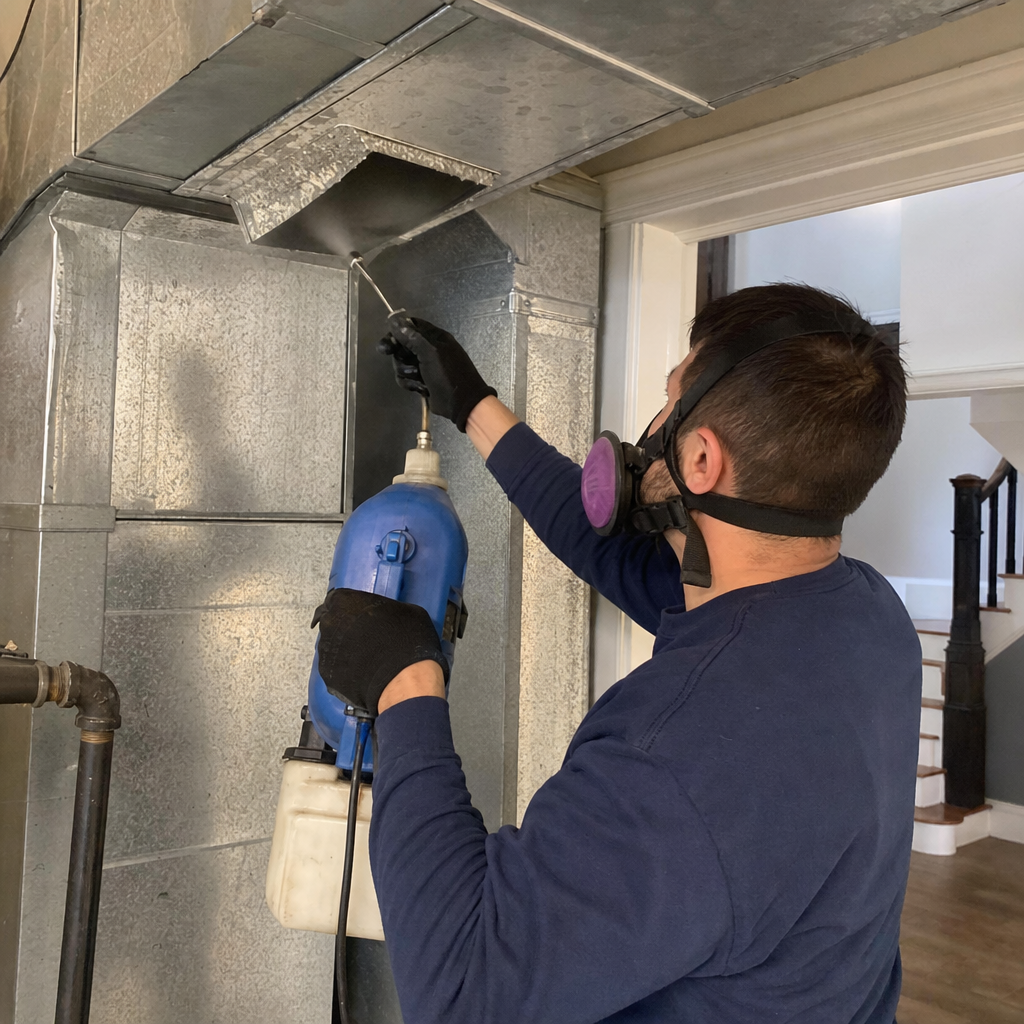
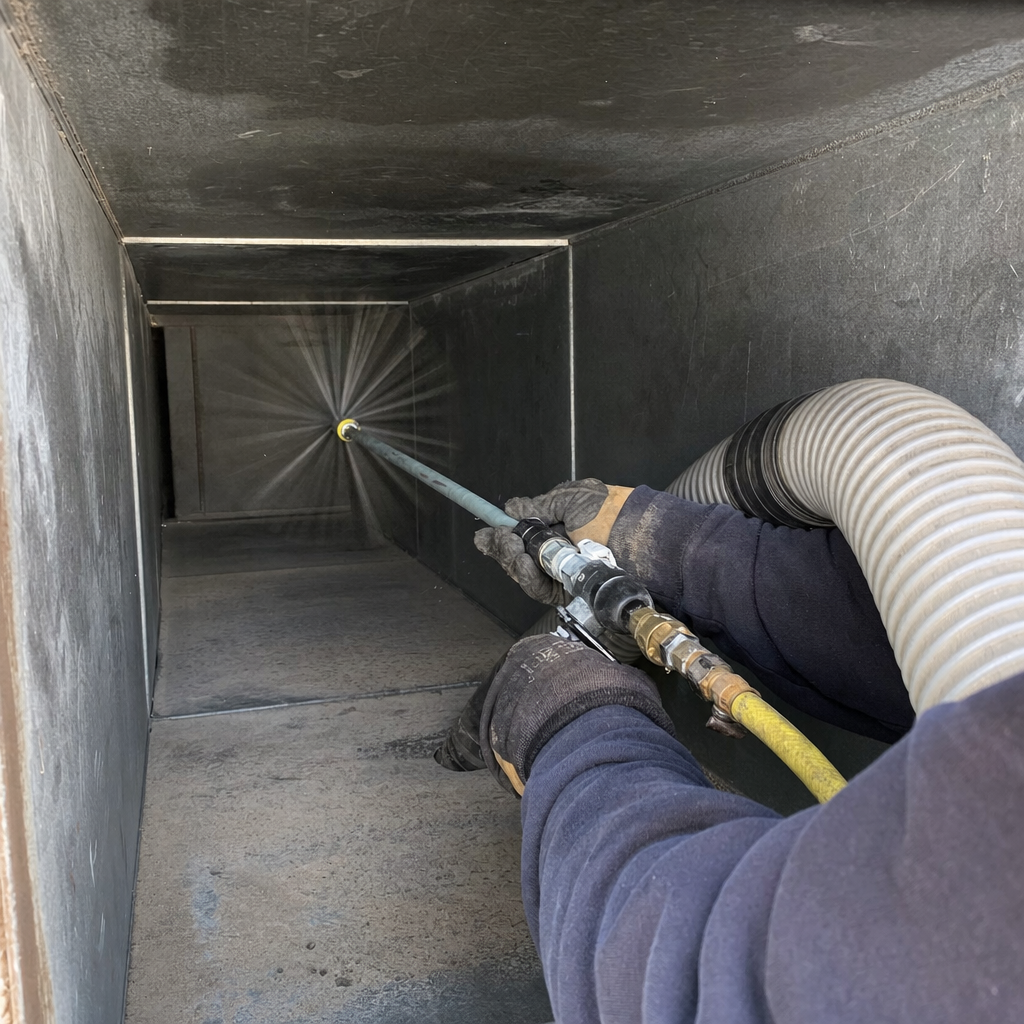
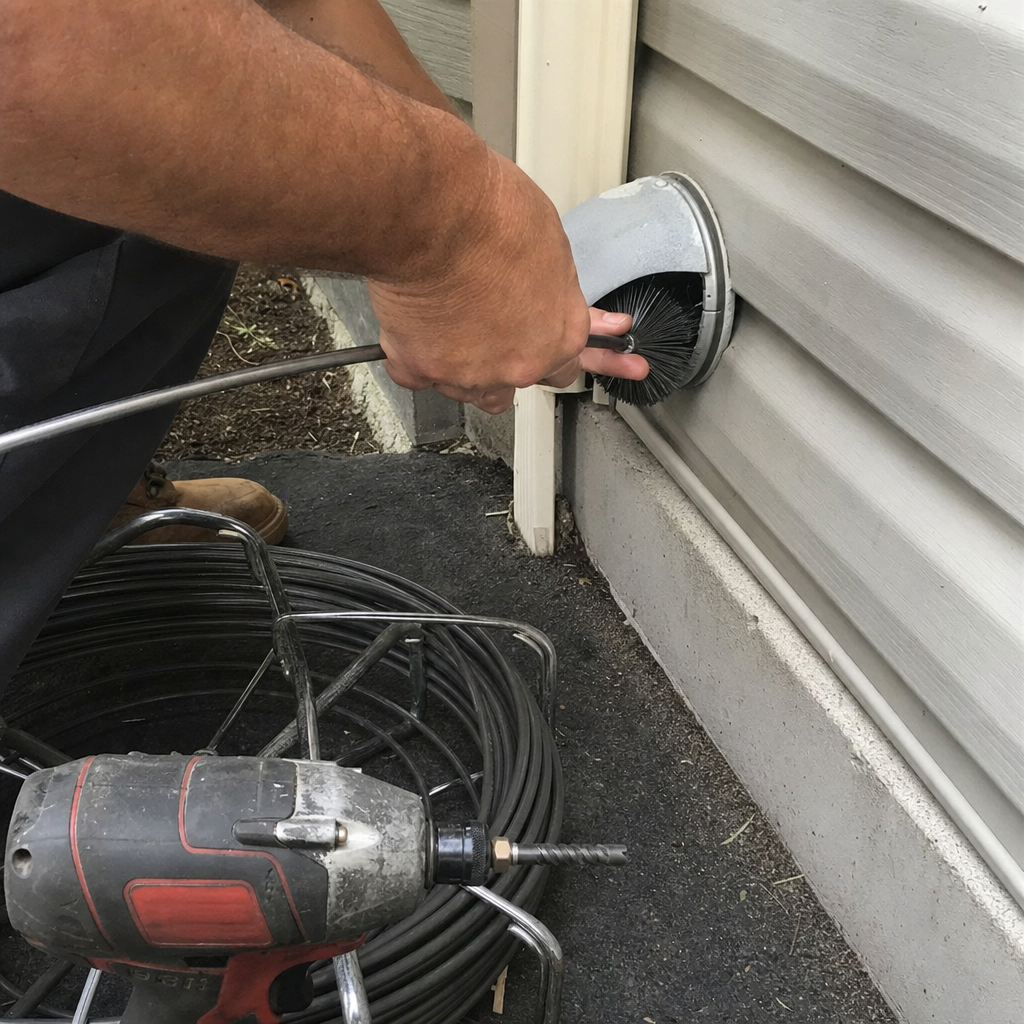
Bacteria sanitizing in Corona typically costs $280–$450 for residential systems. The tri-source contamination here — jet exhaust ultrafine particulates, diesel soot from the elevated 7-train, and grease exhaust from Roosevelt Avenue’s dense restaurant corridor — creates a nutrient-rich biofilm inside ductwork that standard residential cleaning doesn’t touch. We use contractor-grade fogging and HEPA-negative-air containment to reach the full duct run, not just what you can see from the register. This matters in Corona’s older buildings where compressed duct geometry traps debris in pockets unreachable with consumer-grade equipment.
Odor Removal
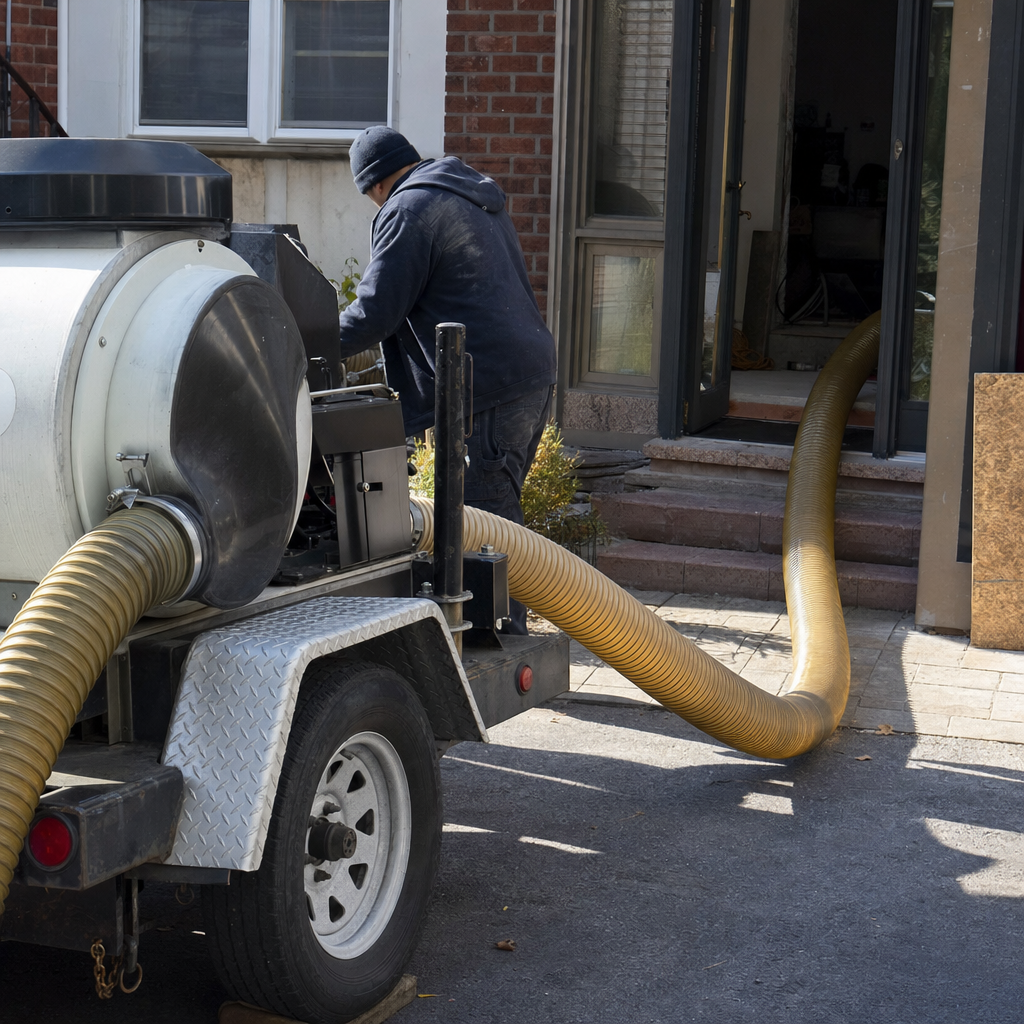
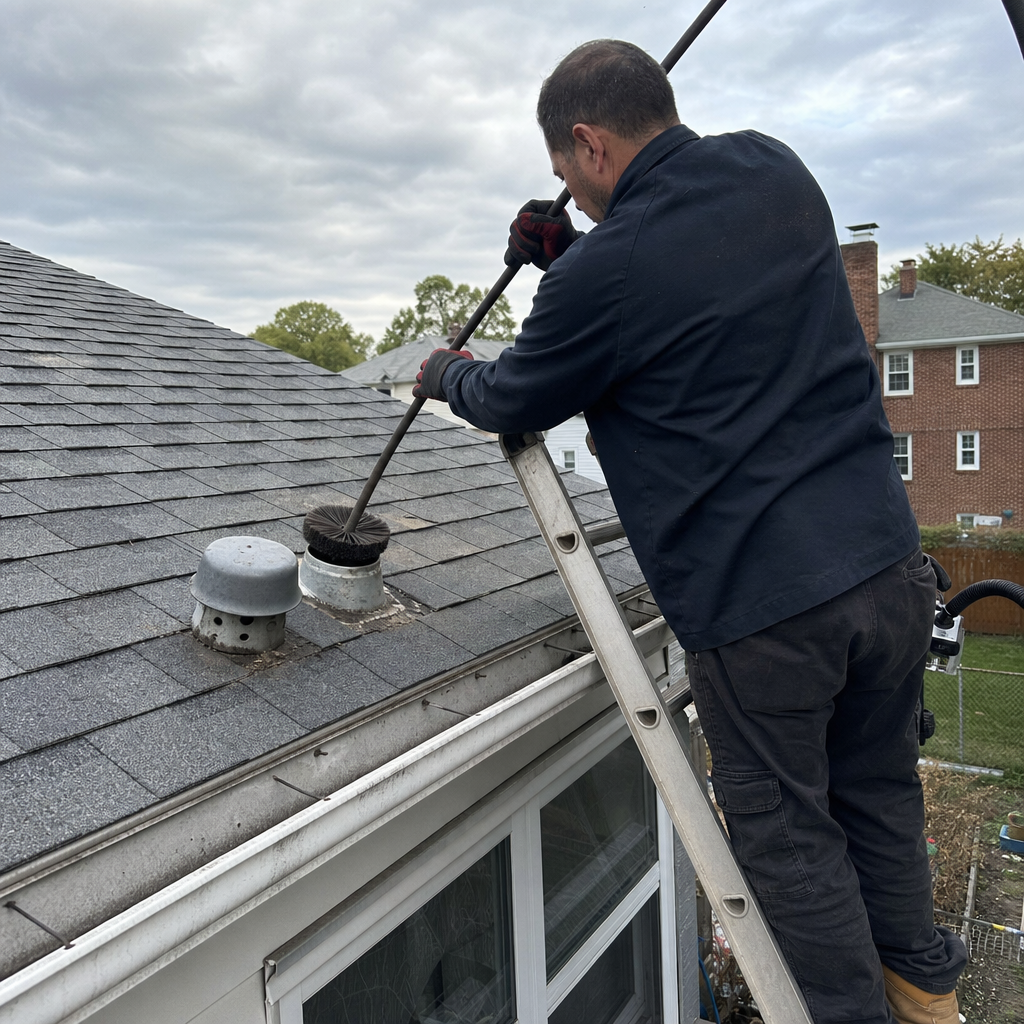
Odor removal in Corona ranges from $250 for targeted treatment to $600–$850 for whole-system remediation in heavily contaminated properties. The characteristic musty, oily smell in Corona ductwork isn’t “just old building” — it’s the accumulated signature of aviation particulate, diesel carbon, and cooking grease breaking down in humid conditions. We serviced a 1930s row house on 104th Street near Roosevelt Avenue where the retrofitted duct system had never been cleaned. Our Rotobrush vacuum extracted a tar-like sludge from the return grilles — a mix of jet exhaust fine carbon, diesel particulate from the 7-train overhead, and cooking grease from the pizzerias below. After sanitizing with an Abatement Technologies HEPA unit and installing a Honeywell UV light at the coil, the homeowner reported the musty odor vanished and allergy symptoms eased.
UV Light Installation
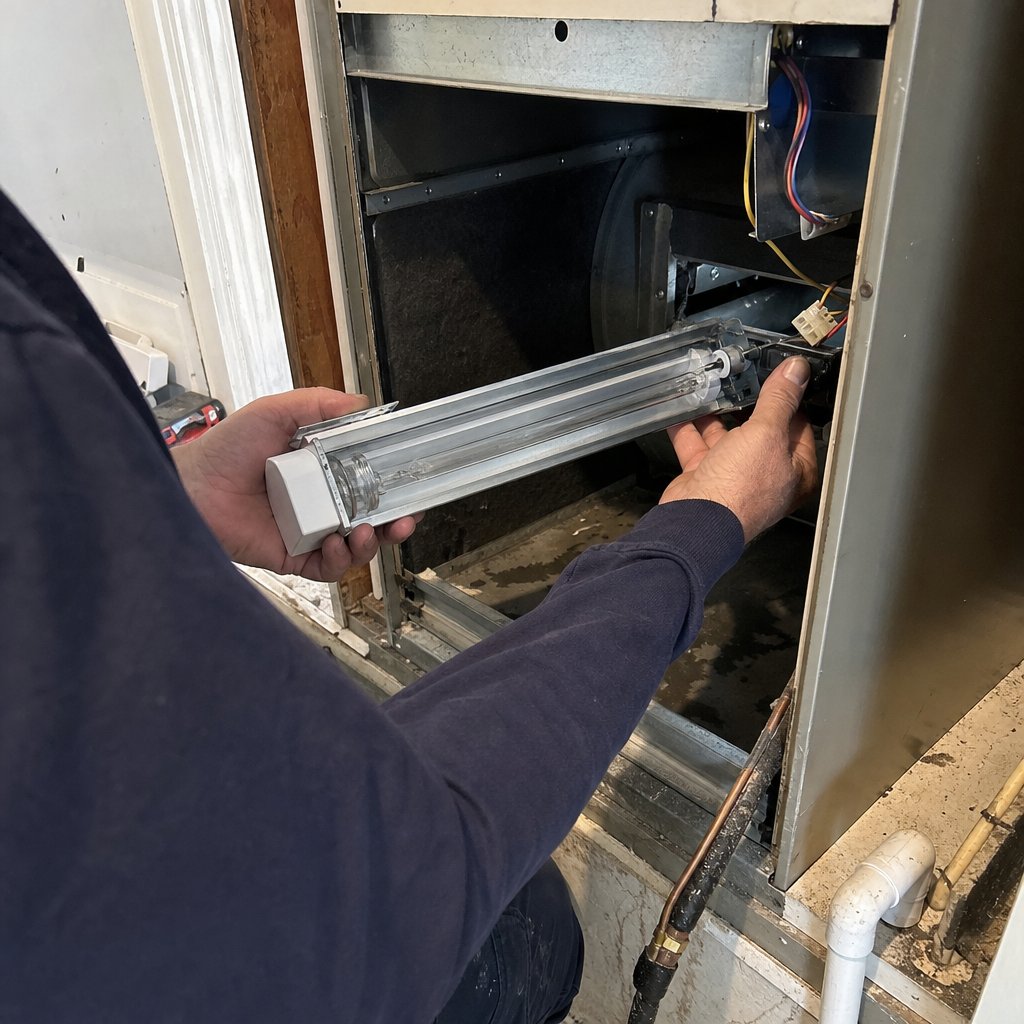
UV light installation in Corona costs $380–$620 for coil-mounted systems, with whole-duct configurations running $750–$1,100 depending on access and duct geometry. In Corona’s contamination environment, UV-C at the evaporator coil is essential — it stops mold and bacterial growth before it becomes the source of that recurring musty smell. We install Honeywell and Aprilaire UV systems sized to your specific air handler, not generic kits that lose effectiveness in the first year. For buildings along the Roosevelt Avenue corridor, we often pair UV with upgraded filtration because the particulate load here exceeds what standard residential systems were designed to handle.
What happens when you call
- 1
A real person answersNo phone trees — you reach a local pro.
- 2
You get an upfront price rangeHonest numbers before anyone is dispatched.
- 3
A background-checked tech heads outLicensed & insured, dispatched right away.
- 4
You approve before work beginsNothing starts until you say go.
Trusted Brands We Service in Corona
We work with Honeywell, Aprilaire, and Guardsman air quality systems — brands we’ve installed and maintained across hundreds of Queens properties. For Corona customers, this means we stock common UV bulbs, filter cartridges, and sanitizer components locally, so you’re not waiting a week for parts while your system circulates untreated air. Our Abatement Technologies and Nikro equipment is the same industrial-grade hardware used in commercial remediation — contractor-grade equipment most residential crews never carry — which matters when you’re dealing with Corona’s tri-source contamination pattern. From cleaning to repair to sanitizing — one call closes the loop on your air quality.
Common Air Quality & Sanitizing Problems We See in Corona Homes
- Old metal ducts corrode and develop leaks that pull in aviation soot from crawlspaces. In Corona’s 1920s–1940s brick row houses, original steam-heating infrastructure left gaps and chases that retrofitted ductwork often fails to seal. We find return ducts in basements and crawlspaces drawing in unfiltered air contaminated with LaGuardia jet exhaust particulate, cycling that pollution back into living areas no matter how clean the filter looks.
- Compressed retrofitted duct runs cannot accommodate standard cleaning tools. These tight, convoluted passages — common in Corona’s converted row houses — trap debris far more aggressively than purpose-built systems. Consumer-grade vacuums and brush systems simply can’t navigate the bends, leaving deep pockets of contamination that re-release into the air stream every time the blower cycles.
- Moisture from humid summers condenses in uninsulated ducts, fostering mold that recontaminates the air after sanitizing. New York City’s June-through-September humidity pushes Corona’s older metal ductwork below the dew point, especially in drafty brick buildings with minimal envelope insulation. We’ve treated systems where mold returned within six months because the previous contractor sanitized without addressing the condensation source.
- The tri-source contamination pattern creates a biofilm standard treatments can’t penetrate. Technicians working buildings along the Roosevelt Avenue corridor regularly find return-air ducts coated with a dark, oily residue that is a combined signature of diesel soot from the elevated 7-train structure overhead, grease exhaust from the dense concentration of street-level restaurants below, and the fine carbonaceous particles deposited by low-altitude jet traffic on final approach to LaGuardia — a tri-source contamination pattern essentially unique to this stretch of Corona.
Pricing for Air Quality & Sanitizing in Corona, NY
Here’s what Corona customers actually pay:
- Bacteria sanitizing: $280–$450 (residential), $550–$850 (multi-family or commercial)
- Mold treatment: $320–$580 (moderate), $750–$950 (severe or widespread)
- Odor removal: $250 (targeted) to $600–$850 (whole-system)
- UV light installation: $380–$620 (coil-mounted), $750–$1,100 (whole-duct)
- Air purifier install: $450–$1,200 depending on unit capacity and duct modification needed
- Allergen reduction package: $350–$600 (cleaning + sanitizing + filter upgrade)
What moves you up or down in these ranges: system accessibility (crawlspace vs. basement), contamination severity (surface vs. deep biofilm), and whether we need to modify compressed duct geometry to reach the full run. Corona’s older housing stock often requires more labor time than newer construction — we quote that honestly upfront, not as a surprise add-on. Estimates are free. Call (833) 754-6107 and Richard will walk through your specific setup.
We Also Serve Cities Near Corona
We regularly work Elmhurst, Rego Park, Jackson Heights, and East Elmhurst — often in the same week when property managers or landlords need consistent service across multiple buildings. Each neighborhood has its own contamination profile: Jackson Heights’ pre-war elevator buildings, Elmhurst’s mixed commercial-residential corridors, Rego Park’s larger co-op complexes. We adjust our approach accordingly, but Corona’s aviation-corridor tri-source pattern remains the most aggressive we treat in western Queens.
Serving Corona, NY — Our Local Coverage Area
We’re based in the Corona area and know this community well. Use the map below to see our service coverage — if you’re nearby, we can almost certainly help.
FAQs — Air Quality & Sanitizing in Corona
That residue is Corona’s signature tri-source contamination: ultrafine jet exhaust carbon from LaGuardia’s flight path, diesel particulate from the elevated 7-train, and grease exhaust from Roosevelt Avenue’s restaurant density. Standard cleaning removes surface buildup but doesn’t penetrate the biofilm that forms when these three sources combine in humid duct conditions. We use Abatement Technologies HEPA-negative-air systems and targeted antimicrobial fogging to break that bond, then install UV or upgraded filtration to slow reaccumulation. Call (833) 754-6107 for an exact quote — estimates are free.
Yes, and these retrofitted systems are actually our most common Corona job. The compressed, non-standard duct runs in converted row houses require specialized brush systems and camera inspection to navigate — exactly why we use Rotobrush and Nikro contractor-grade equipment rather than residential-grade tools. We sanitize the full accessible run, seal leaks at junction points, and recommend UV installation at the coil to prevent mold in those hard-to-reach bends. Call (833) 754-6107 for an exact quote — estimates are free.
Every 18–24 months for most Corona properties, versus the 3–5 year interval adequate in lower-contamination areas. The aviation particulate load beneath LaGuardia’s approach corridors, combined with Roosevelt Avenue’s diesel and grease exposure, accelerates duct fouling measurably. Buildings directly under the flight path or within two blocks of the 7-train may need annual inspection. We assess contamination rate during your first service and recommend a schedule based on your specific location and system type. Call (833) 754-6107 for an exact quote — estimates are free.
UV-C at the evaporator coil prevents the mold and bacterial growth that amplifies odors, but it doesn’t filter particulate or volatile organic compounds directly. For Corona properties above or adjacent to restaurant exhaust — common along Junction Boulevard and Roosevelt Avenue — we typically pair UV with activated-carbon filtration upgrades. The combination addresses both the biological odor source and the grease-laden particulate carrying those smells. Call (833) 754-6107 for an exact quote — estimates are free.
It’s running, but it’s likely circulating concentrated contamination through every room. In Corona’s environment, “never cleaned” typically means years of accumulated aviation particulate, diesel soot, and grease biofilm — not ordinary household dust. We recommend scheduling inspection before peak summer A/C season, when recirculation pulls maximum outdoor contamination through the system. Richard Anderson — owner and lead technician — handles your job personally, and we’ll give you an honest assessment of whether cleaning, sanitizing, or component replacement is the right first step. Call (833) 754-6107 for an exact quote — estimates are free.
Written by Richard Anderson, Owner at Landmark Air Duct Cleaning Service New York, serving Corona and New York City since 2004.